
What the photo shows
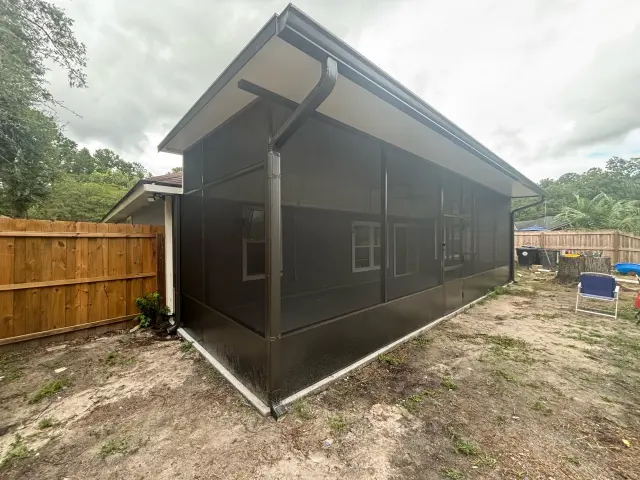
The white roof underside projects beyond the screened wall. Tall screen panels fill the space below, and the gutter turns down at the front corner.
The photo shows a solid roof over a screened space, with tall screen panels below its raised roof edge. A gutter and downspout run along the outside corner. If you are planning a covered patio, this example helps you picture where solid cover ends, how high the screened walls may need to be, and where roof water will go.
The white roof underside projects beyond the screened wall. Tall screen panels fill the space below, and the gutter turns down at the front corner.
The solid roof covers this whole pictured screened space. If you also want a screen-roof section, decide which part of the patio needs solid cover so both areas are named in the quote.
These screen panels reach up to the raised roof edge. At your home, the roof height, door position and wall openings should be checked against the house and the space you want to use.
The visible gutter and downspout show one drainage route. Ask where water from your proposed roof will land and whether the written scope includes gutters and downspouts.
The roof-systems page explains composite, pan and mixed layouts. A rough range can help you plan, but an on-site visit is needed to check your roof connection, supports, drainage and permit path.
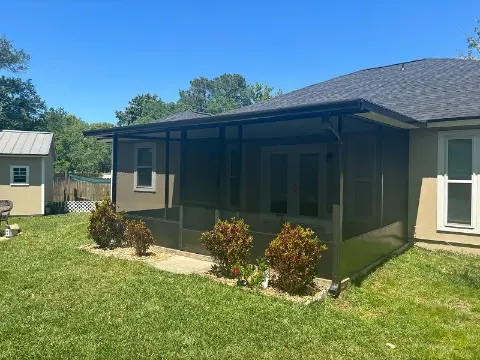
This example sits beneath a house roof edge. Compare its shorter screen walls with the taller walls in the main photo.

This view shows a covered house patio next to taller screened sections. Decide which spaces need solid cover and which can stay screened overhead.
Tell us which area you want covered, whether you also want a screen-roof section, and where water should drain. We can check the house connection and wall layout on site.