- Serving North Florida
- contact@enclosurespecialist.com

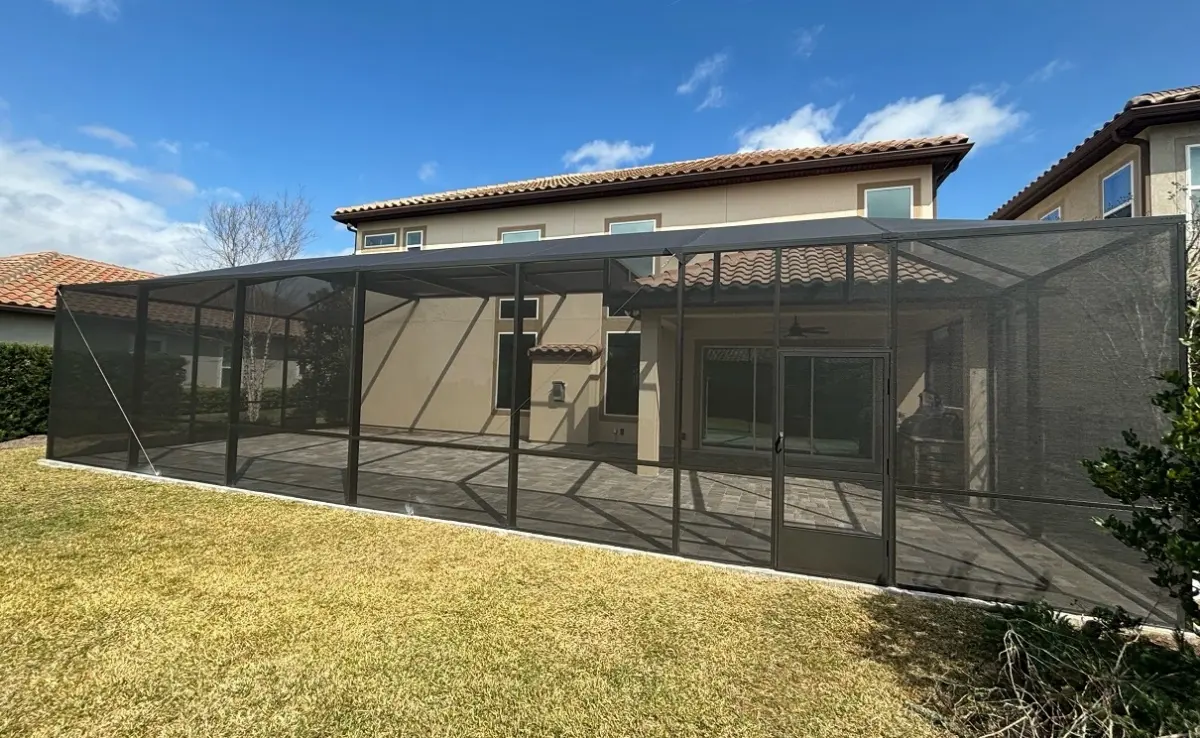
18/14 vs 20/20 screen: which mesh makes sense for your enclosure?
For a North Florida pool enclosure, a useful starting choice is Phifer's 18/14 pool-and-patio screen or its tighter 20/20 no-see-um screen. Both allow air and a view through the enclosure. The question is whether ordinary insects or smaller biting insects are the main problem around your yard.
The best screen is not the most expensive one. It is the one that matches the way you actually use the space.
Quick answer
Start with 18/14 for everyday pool-enclosure screening against most insects. Consider 20/20 if no-see-ums or other small flying insects are the main frustration. If only a few panels are torn, ask for a screen repair quote. If whole sides have worn screen, see how we handle rescreening and tell us which insects you want to keep out when you request an on-site quote.
Check whether the screen needs replacing
Dirt alone is not a reason to replace intact screen. For reachable Phifer vinyl-coated fiberglass panels, try mild soapy water without hard scrubbing, as Phifer advises. Stay on the ground and leave roof panels alone. If the mesh is torn or pulling loose, use the repair and rescreening choices above.
What the numbers mean
The numbers describe how tight the mesh is. 18/14 generally means about 18 strands one direction and 14 the other direction per inch. 20/20 is tighter, with more strands packed into the same space. Tighter mesh has smaller openings, which is why it can help with smaller insects.
When 18/14 usually makes sense
Phifer describes its 18/14 pool-and-patio screen as a traditional fiberglass choice for enclosures that keeps out most insects while letting breezes through. It is a practical starting point when tiny insects are not the main problem.
When 20/20 may be worth it
Phifer's 20/20 no-see-um screen is designed to keep out most smaller flying insects, including no-see-ums and gnats, which can be a concern near marshy or coastal areas. If that is your main complaint, bring it up when planning a full rescreen.
The tradeoff homeowners should know
Phifer says its 20/20 mesh still allows good ventilation and visibility, with some daytime privacy. If the view or breeze matters most to you, compare samples in person before deciding. Mesh count alone does not tell the whole story.
What the mesh choice costs in one example
For a 20-by-30-foot enclosure with four 8-foot-high walls and a screen roof, our rescreening cost example starts at about $2,955 with 18/14 or $3,235 with 20/20. It includes no fastener replacement or other repairs. The $280 difference is for this example, not a fixed charge for every enclosure. Use your own measurements in the online estimate.
Pet areas and busy doors are a different conversation
If pets, kids, or high-traffic door panels are the main issue, mesh count is only part of the answer. You may also want to talk through pet screen, kick plate, door hardware, or panel placement so the stronger material goes where it actually helps.
Use the online estimate as a starting point
For whole-side screen work, the online rescreening estimate gives a rough starting range. For a written quote, request an on-site review and mention whether small insects, pets, or worn panels are driving the work.