

What changes the price
Wall count, roof coverage, mesh, and hardware.
That is why a simple square-foot guess is rarely enough. The estimate walks through the details that actually matter.
If screen is worn or torn across several areas but the frame is worth keeping, a partial or full rescreen may fit. We use Phifer screen. Choose mesh for the insects around your yard, and ask us to check the roof screen and old hardware before we quote the work.
That is why a simple square-foot guess is rarely enough. The estimate walks through the details that actually matter.
For a 20-by-30-foot, four-wall pool cage with 8-foot walls and a screen roof, our estimator shows about $2,955 with Phifer 18/14 mesh or about $3,235 with 20/20. That example excludes fastener replacement and other repairs. See the full cost example for its measurements and scope.
Your enclosure's measurements, roof coverage, mesh, and hardware work can change the starting amount. A written quote needs a look at the enclosure. When comparing bids, use our written-quote checklist to check which walls and roof screen, mesh, and hardware work each one includes.
Before using the rough range: Count the whole screened sides that need new mesh, not individual panels. Measure each side from corner to corner and note one wall height. The tool asks whether the roof screen is included; a solid roof is a different choice. You do not need to climb to measure the roof. If the layout or measurements are unclear, ask us to measure it for an on-site quote.
The total changes depending on how many screen walls need new mesh and whether the roof is included.
Phifer 18/14 is a practical starting choice for most insects. Its 20/20 mesh targets most smaller flying insects. Compare the two mesh options before selecting one in the estimate. If pets keep damaging lower panels, compare pet screen and kick plates.
Point out rust stains, loose connections, or worn anchors during the visit. New mesh will not fix a hardware problem, so ask us to check whether replacement belongs in the quote. SES uses stainless fasteners for that work. For a loose cable or tie-down, see what to note before rescreening.
From the ground, note how many panels are torn, where they are, and whether nearby screen looks worn. You do not need to judge the frame's condition yourself.
Wall count and roof coverage both matter when the project is this open and this large.
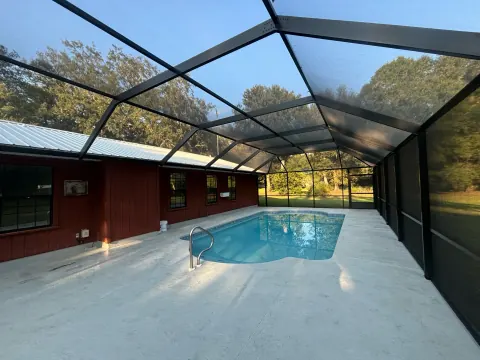
If you like your current layout and the frame is sound, new mesh can be considered without changing the structure.
If screen is worn across whole sides, the rough-range tool can give you a starting amount before a visit. If only a few panels are torn, request a repair quote instead; the tool asks for whole screened sides, not individual panels.
Yes. Choose Phifer 18/14 for an everyday starting point or consider 20/20 when smaller flying insects are the main concern. The mesh guide explains the choice, and the rough-range tool shows how it affects the starting amount.
If the roof screen is worn but the wall screen looks usable, ask for a roof-only quote. Tell us whether one roof area or several are loose or torn. We will check the surrounding screen, frame and hardware before saying what can stay. For a full rescreen, ask which walls and roof areas the written quote includes, along with mesh, fasteners and other repairs.
Then rescreening may not be the right fix. If the frame, hardware, or structure are failing too, it makes more sense to look at repair or rebuild instead.
For worn screen across whole sides, start with the rough-range tool before a site visit. For roof-only work, request an on-site quote because the range includes wall screen. For just a few torn panels, request a repair quote and tell us how many panels need work.