

Start with the right question
Fresh screen is not always the whole job.
Mesh, lower-panel protection, cable hardware, doors, roof type, and base conditions can all change the real next step.
A new pool cage starts with a layout, roof and base plan. An existing enclosure may need only a few panels repaired or a broader rescreen. Use the guides below to choose your next step.
Mesh, lower-panel protection, cable hardware, doors, roof type, and base conditions can all change the real next step.
Compare the work involved, then ask us to look at your specific enclosure when you are ready.
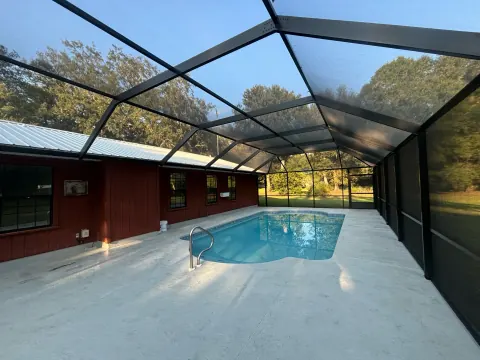
Start with the roof, base and permit work each written bid includes. Then compare screen, hardware and exclusions before choosing by the total alone.

While the weather is calm, see what you can check safely from the ground. After a storm, wait until officials say it is safe outside before looking for damage.
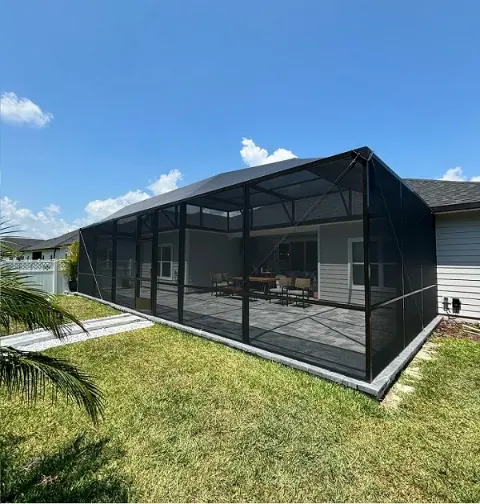
See one 20-by-30-foot example from our online estimator and what mesh, roof coverage, and repairs change. Its figures are rough starting amounts for that example, not a price promise for your pool cage.
Read cost guide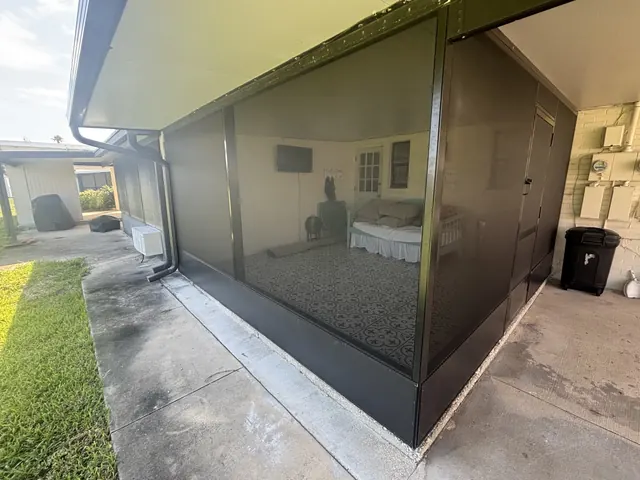
See when 18/14 or tighter 20/20 mesh may fit, and what to ask if small insects, breeze, or the view matter most.
Read mesh guide
Sort out where stronger screen, kick plates, chair rail, or door hardware can help instead of upgrading everything by default.
Read pet screen guide
Learn what to look for before treating a screen repair like a screen-only job. Hardware concerns should be reviewed before new screen goes in.
Read cable guide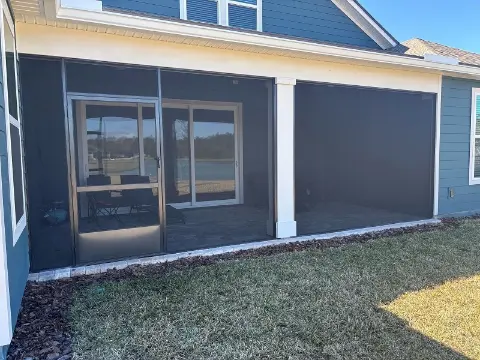
Decide whether the project is a simple existing-roof screen-in, a repair or rescreen, or a bigger new enclosure conversation.
Read lanai guideA few torn panels can start with a repair quote. For a new layout, worn screen across several sides or frame trouble, see the matching service first.
That keeps the first conversation grounded in what the enclosure actually needs.