
Planning first
Covered space still needs clear scope.
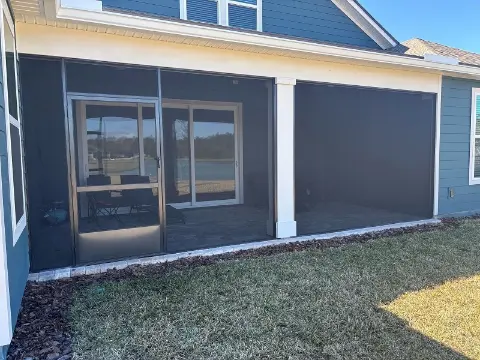
This screened patio shows how walls and a door can fit beneath an existing roof. We check the openings, attachment points, and base at each home before quoting.
Already have a patio roof? We can screen beneath it after checking the openings, slab and attachment points. Need a new roof or base too? That calls for a larger enclosure plan.
This screened patio shows how walls and a door can fit beneath an existing roof. We check the openings, attachment points, and base at each home before quoting.
First decide whether you want the opening screened all the time, screened only when needed, or repaired. The roof and base determine which plan fits.
For covered patios and lanais where the roof is already in place and the work is mainly screen walls, doors, mesh, and clean attachment points.
If you want shade or privacy some of the time but a clear opening at others, compare motorized rolldown screens with fixed walls. The opening size, mounting conditions, and wind exposure need a site review.
For patio spaces that may need a new screen roof, covered roof option, or a layout closer to a new enclosure than a simple screen-in.
For existing screened lanais with worn mesh, door trouble, or local damage. A few torn panels can go straight to a repair quote; use the rough range for whole sides that need new screen.
Door placement matters when the lanai is the main path to the yard, pool, grill, or pets. Hardware, sweeps, and lower-panel protection should match how the space is actually used.
If smaller flying insects are the problem, compare 18/14 and 20/20 mesh. If pets or repeated bumps damage lower panels, see where pet screen or kick plates may help. Tell us which openings give you trouble so the quote covers the right areas.
If afternoon glare is the problem, note which opening gets direct sun and when. Phifer SunTex 80/90 is a shade-screen option, but its denser weave changes the outward view. We should check the opening and frame before quoting it for fixed panels.
The base under the enclosure affects attachment and planning. Pavers, tile, existing slab, and footing conditions should be checked before the job is treated as simple screen work.
A small covered porch and a wide lanai opening are not the same job. Wall count, opening width, height, and transitions to the house all affect the right scope.
Not always. A covered-patio screen-in uses an existing house roof. A new pool enclosure is planned around the pool or deck and needs its own roof choice; it may connect to the house. Choose the rough-range path by the work you want.
Often, yes. The roof helps, but the openings, base, door placement, attachment points, and mesh choice still need to make sense before the job is scoped.
They can help when pets, kids, chairs, toys, or yard equipment keep damaging the lower panels. They are usually best planned where the abuse actually happens instead of across every opening by default.
If the space is straightforward, the online estimate can help you start. If the roof, base, or tie-in is unclear, request a site review instead.